
Self-Service Kafka for Domain Teams
Ship data products without tickets. Workspaces give teams their own slice of Kafka. Templates enforce standards. Policies prevent drift. Platform teams scale without becoming a bottleneck.
Trusted by platform teams at





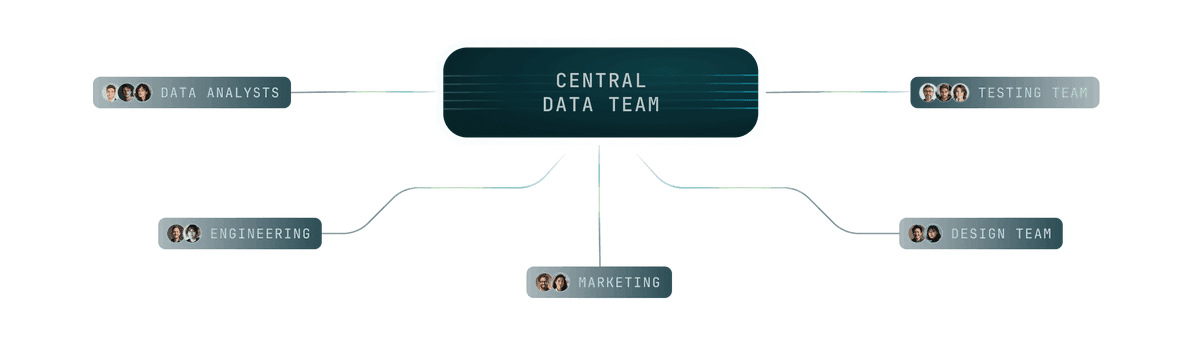
A small central team handles every topic, ACL, connector, and schema change. Every new data flow goes through tickets.
Teams bypass the platform with direct admin access and custom tools. Standards drift, topic catalogs lose structure.
Kafka objects don't map to sites, assets, products, or programs. Nobody owns the data products on Kafka.
The central team becomes the constraint:
- Weeks to provision a new topic
- Every exception requires manual review
- Platform team carries all the risk
- Innovation waits in queue
Without self-service:
- Over-privileged access requested for speed
- Scripts and homegrown portals lose ownership
- Naming and retention rules applied inconsistently
- Compliance gaps emerge
Ownership is unclear:
- Topics have no clear owners
- No documentation or samples
- Can't trace data lineage
- Reuse becomes impossible
Team Workspaces
Each domain gets a workspace linked to IAM groups. Teams see and manage their own resources
Application Policies
Policies encode defaults for naming, retention, partitions, and replication. Consistency without tickets
Guided Workflows
Teams create topics, schemas, and connectors through workflows. Approvals where needed, automation everywhere else
Topic Catalog
Search by product, asset, site, or program. See ownership, labels, and documentation
Policy Engine
Naming conventions, retention, and partitions enforced automatically via CEL rules. No drift
GitOps Integration
Works with Terraform or your existing CI/CD. Declarative config with code reviews and rollbacks
Role-Based Access
Operators, developers, and data users get appropriate access. No over-provisioning
Guardrails Not Gates
Policies prevent mistakes without blocking work. Teams move fast within safe boundaries
Multi-Cluster View
Manage Confluent Cloud, AWS MSK, Azure Event Hubs, and self-managed clusters from one UI. Teams see topics, not infrastructure
Domain Health
Local teams see the health of their own streams. Central team keeps a global view
Service Account Lifecycle
Teams manage their own service accounts with full CRUD and ACL management
Faster Onboarding
New team members create their first topic in under an hour. Workspaces, templates, and docs ready from day one
How Self-Service Kafka Provisioning Works
Four steps from gatekeeper to enabler.
Map workspaces to IAM groups and business domains. Teams see their own slice of the Kafka estate
Encode patterns for topics, schemas, and connectors. Teams provision within policy guardrails. Minutes instead of weeks
Teams request resources through guided forms. Approvals route to the right people
Topics and schemas tagged with owners, docs, and samples. Teams discover existing data before creating duplicates
Product Teams
Self-serve topics, schemas, and access for new services. No waiting for platform team
Factory & Plant Teams
Connect MES, SCADA, and production line systems to Kafka using approved patterns
Data Teams
Request read access to operational topics. Consume through governed service accounts
Supply Chain Operations
Warehouse, order, and fulfillment teams get their own workspace for logistics events
Platform Teams
Expose standard paths to feed Kafka data into lakehouse or warehouse. One pattern, many teams
Security & Compliance
Review access and policy compliance per workspace. Audit trails ready
Need to migrate from ESB and MQ to Kafka first? Or share Kafka data with external partners? See how Conduktor Console enables self-service.
Read more customer stories
How do Kafka workspaces map to our org structure?
Workspaces can map to teams, products, plants, regions, or any organizational unit. They're linked to IAM groups, so membership syncs automatically.
Can teams create any Kafka topic they want?
Teams create topics within policy guardrails. Policies enforce naming, retention, partitions, and other standards. Custom requests go through approval workflows.
What if a team needs a Kafka resource outside the templates?
Exception workflows route requests to platform or security teams. Decisions are tracked and can inform future template updates.
How does Kafka self-service work with GitOps?
Kafka configuration lives in Git as declarative YAML. Conduktor syncs with Terraform or your CI/CD pipeline. Changes go through code review before applying.
Do we still need a central Kafka platform team?
Yes, but their role shifts from ticket processing to platform engineering. They define templates, policies, and patterns instead of handling every request.
Ready to scale your Kafka platform?
See how Conduktor enables self-service Kafka with guardrails. Our team can help you design a workspace and template strategy.